



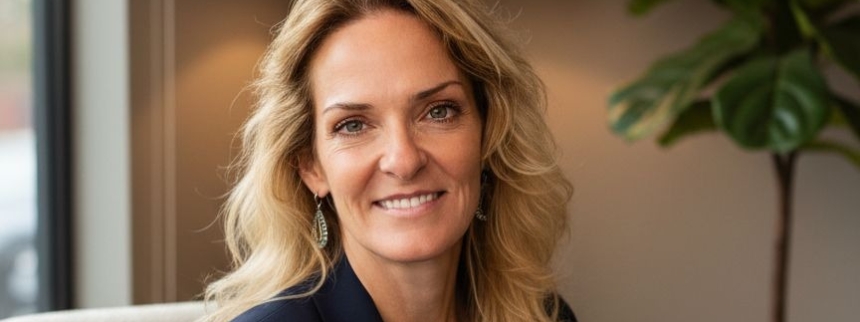
I remember the middle of May 2007 vividly. I was in my early thirties and many of my friends were having children. Baby shower invitations seemed to arrive one after another. I had been seeing specialists for years, enduring misdiagnoses, circular reasoning, and, most significantly, a gradual loss of hope. That May, I was again told what had become a familiar conclusion: I would not be able to have children without significant fertility medical interventions that would cost thousands of dollars and offer no guarantees.
At the time, I was not Catholic. My relationship with God was distant and uncertain. I remember asking — not even in words, but in a kind of ache — why. It felt as though I had done something wrong, and I was being punished.
After the final call with yet another doctor, I was overcome with despair. I went to bed in tears, and that night I had a vivid dream. I stood in a vast, empty desert, and in the distance, words appeared before me on a large screen answering a question I had not yet spoken: “You won’t die and be with me until you have a baby.” I woke up shaken but certain that I was pregnant.
Two weeks later, during a follow-up appointment, a physician confirmed what I had scarcely dared to believe: I was, in fact, six weeks pregnant.
It would be easy for the reader to interpret my story as evidence that faith leads to answered prayers. But that is not the message I wish to offer.
Scripture holds a similar tension. We read about women such as Rachel, Hannah, and Elizabeth—women who experience infertility and are later given children. Their stories are remembered, retold, and often held up as signs of God’s faithfulness.
And yet. Scripture is quieter about the woman whose longing remains. Those stories are rarely given attention, often unnamed. For many women, that silence feels familiar. Even in Isaiah 54:1 — “Sing, O barren one who did not bear” — the passage is often read as referring to Israel, yet it can also be heard as a direct address, an invitation to a form of fruitfulness not limited to biological motherhood.
Years later, both as a woman who had lived for years with that uncertainty and as a therapist, I came to understand infertility not simply as a medical condition, but as a particular kind of grief. It is what psychologists call ambiguous loss — a loss without clear resolution, where hope and disappointment can coexist for years. Most forms of grief move, however slowly, toward integration. Infertility often resists that movement. It asks for endurance without a clear endpoint.
In daily Mass, many of the women alongside me in the pews are widows; some have no children. They come faithfully with bowed heads and quiet prayer to receive the Eucharist. There is no pretense of constant joy. But there is something deeper: a steady, lived faith that does not depend on circumstances. In the Eucharist, suffering is not erased, but joined to Christ, to his sacrifice, to a love that does not bypass the cross.
For many Catholic women, infertility is not only physical or emotional suffering, but spiritual loss of hope. It raises questions about purpose, worth, and God’s presence in unfulfilled longing.
Well-meaning comments — “just pray more,” or “have you considered adoption?” — can
unintentionally deepen the wound. So it is understandable when women wrestle with the desire to resolve suffering quickly, even with significant costs. In those moments, what is being tested is not only hope, but fidelity to hope itself; choosing hope without immediate resolution.
There are also times when grief and loss of hope become heavier, when it presses into the body and daily life through disrupted sleep, changing appetite, thinning energy, the day itself becoming difficult to manage. When even waking up feels burdensome. These are not signs of weak faith.
They are signs that suffering has gone too long without accompaniment and that support, including therapy, may be needed.
The Church does not offer a simple solution to infertility. She does not promise that longing will be resolved in the way we hope. But she does offer something steadier: a vision of human dignity that is not contingent on biological motherhood, and a place where suffering can be named without being reduced.
The God we encounter in Scripture is not only the giver of life, but the one who hears the cries of those who wait; who remain in the desert longer than they expected, who pray without the answer they longed for.
For some, the story includes an unexpected child. For others, it does not. Yet the invitation of faith remains the same: not a promise that the desert will bloom on our terms, but the assurance that even there, it is not empty — and that no longing, however barren it feels, needs to be carried alone.