



“For many Vietnam veterans, the welcome home they deserved never came,” says Scott Miller about the Citrus Heights Veterans Memorial Project (CHVMP). “The Wall will give those names a place and their memory a form. For many families, the names engraved on the Vietnam Veterans Memorial Wall in Washington, D.C. remain deeply personal – a son, a brother, a husband, a friend, a fellow service member. Our work is to bring that experience closer to home.”
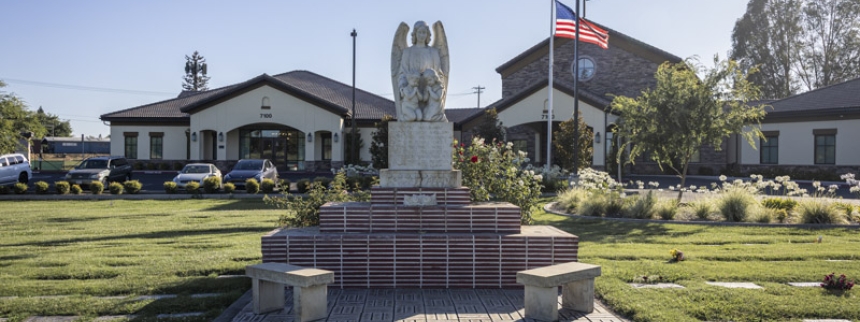
Scott, who has been chief operating officer of Catholic Funeral and Cemetery Services for the Diocese of Sacramento since 2019, also serves as chairman of the board of the CHVMP, with the goal of building a permanent 95 percent replica of the Wall in the nation’s capital in the Veterans Section of Calvary Cemetery, currently used for an ornamental vineyard. The Wall will be the first of its kind not only in California, but west of Missouri.
The Vietnam Veterans Memorial Wall remains one of the most powerful places of remembrance in America because it does not overwhelm visitors with spectacle. Its power comes from simplicity: polished black granite, engraved names, quiet reflection, and the personal meaning each visitor brings.
For many veterans and families in the western United States, traveling there is not realistic. Age, health, distance, cost and family circumstances can place that experience out of reach.
The CHVMP is a dedicated initiative with a singular mission, Scott notes: to honor and remember the courageous men and women who have served the nation. The permanent replica of the Vietnam Veterans Memorial Wall planned for Citrus Heights is envisioned to be a place where the community can gather, reflect and pay tribute to the sacrifices made by America’s heroes.
The project is fueled by “the commitment of local veterans, families and community leaders who believe that our veterans deserve more than just words of gratitude,” Scott says. “We envision a memorial that not only stands as a symbol of honor, but also serves as a beacon of remembrance for future generations.”
The project is supported by the Vietnam Veterans Memorial Fund in Washington, D.C., in partnership with the city of Citrus Heights and Catholic Funeral and Cemetery Services. The fundraising goal is $2.8 million. Construction plans are approved, contractors are engaged and construction is set to begin as soon as 100 percent of the funding is secured. In addition to the construction of the Wall, the site is being designed to accommodate future veteran’s memorials to honor the sacrifices made by so many Americans.
Scott and Henry (Hank) Pajari are both members of the Knights of Columbus Father Grealy Council No. 4540 of St. Rose of Lima Parish in Roseville, just one of the many local councils of the Knights of Columbus who are offering support to the CHVMP.
Hank, who served in the Vietnam War with the Marines in 1966 and 1967, believes the CHVMP seeks to bring the solemn presence and emotional meaning of the Vietnam Veterans Memorial Wall closer to home, while preserving the dignity of the original memorial experience.
“Our council got involved early on with a substantial monetary donation and we will do anything to make this a reality,” Hank notes. “My understanding is that more than 500,000 men and women served in the Vietnam War and more than 58,000 didn’t come back. Of those who did return, often they were not treated with the respect they deserved. Therefore, this is just the right thing to do to honor their service and dedication to our country.”
Scott says the memorial has advanced from vision to readiness through years of planning, coordination and community support. The design has been completed, construction plans have advanced through city review, and contractors and suppliers have stepped forward with reduced costs and donated support. In addition, community partners, veteran organizations, civic leaders and private donors have “helped carry the project to this defining point.”
He notes that Catholic Funeral and Cemetery Services took the lead on the design and engineering of the wall, and also the eventual construction and long-term care of the Wall. Once constructed, the Wall will be owned by CFCS and a non-profit will be established with an endowment fund to take care of the Wall forever.
Calvary Cemetery will dedicate two acres for the Wall, which will be open to the public, and build a road going back along the current mausoleum, with bus parking to accommodate the increased numbers of people who will visit. The face of the Wall will be visible to eastbound Interstate 80 and also have ample space for future memorials and for additional graves.
Scott says the names of the deceased veterans will be engraved and not etched onto the Wall. He notes that more than 400 of the veterans listed are from the Sacramento area, 16,806 are Catholics and seven are Catholic chaplains.
“The Wall fits perfectly into our master plan of what the veterans’ expansion was going to be, so we didn’t have to change anything,” Scott notes. “Our hope is that people will be drawn to the cemetery because of the wall and it will stimulate conversation between families, parents and children, and grandparents and children, as to the significance of remembering our veterans.”
He adds: “As someone who loves history, and as a true believer in not repeating history, for me to be a part of this effort is truly remarkable and humbling. Knowing that years from now, people will be standing in front of something I helped to put together brings me personal satisfaction that I can be part of this legacy. And to have a positive impact and a positive reputation for the Catholic Church by being involved in this project gives everyone some pride and a good feeling.”
Scott says what remains is the final funding effort required to “move from readiness to construction.”
“This is not simply a construction project,” he notes. “It is a promise that the service and sacrifice represented by the Wall will not fade from public memory. It is a place where veterans can stand with the names of those veterans they served beside, where families can honor loved ones, and where students can encounter history not as a paragraph in a textbook, but as something personal and lasting.”
Scott says the project’s leaders are now inviting funding partners to help them complete the memorial and establish it for generations to come.
“The need grows with each passing year,” he says. “Vietnam veterans are aging. Families continue to carry memories and losses that deserve a permanent place of remembrance. Future generations need spaces where history is not only studied but felt. CHVMP is not asking donors to fund uncertainty. We are inviting funding partners to help complete a serious, organized and achievable memorial project prepared to move toward construction once final funding is secured. We look forward to having a permanent regional place of remembrance.”